

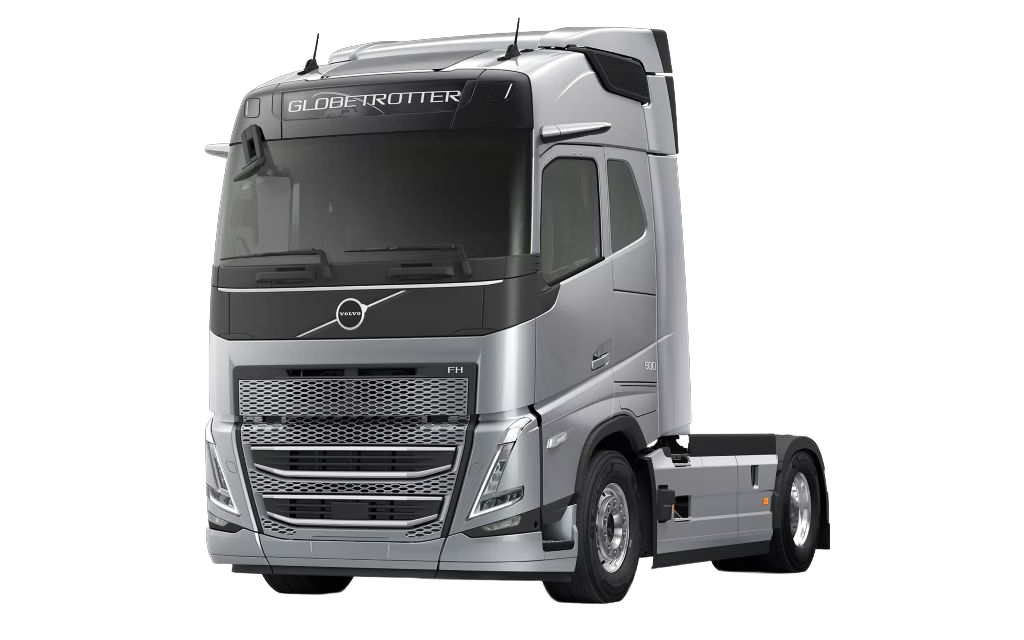
Driving a commercial truck demands more than skill behind the wheel. It requires a complete understanding of the vehicle’s visibility limitations and the systems designed to overcome them. For European heavy-duty vehicles, the mirror assembly is not an accessory — it is a safety-critical component that determines whether a driver can safely change lanes, reverse into tight loading bays, or navigate congested urban intersections.
Unlike passenger vehicles, semi-trucks lack a central rearview mirror. The driver must rely entirely on a carefully configured mirror system to monitor traffic, judge distances, and eliminate blind spots. A poorly specified or degraded mirror assembly does not merely reduce comfort; it creates measurable safety gaps that increase collision risk during every maneuver.
Types of Truck Mirrors
Modern commercial vehicles are equipped with multiple mirror types, each serving a distinct optical function. Understanding these categories is essential when specifying replacement mirrors or upgrading a fleet’s visibility system.
Side-View Mirrors
Side-view mirrors are the primary visibility tool for truck drivers. Mounted on both sides of the cab, they provide the widest view of adjacent lanes and following traffic. Because semi-trucks do not have interior rearview mirrors, these external units must deliver sufficient coverage to compensate for the entire rear and side field of vision.
When correctly adjusted, side-view mirrors minimize the trailer’s blind spots and enable safe lane changes. A cracked glass pane, a failed bracket, or a misaligned housing can render the mirror ineffective. For technicians performing replacements, selecting an OE-fit side mirror assembly ensures the mounting geometry, electrical connections, and optical alignment match the original specification.
Wide-Angle Mirrors
Wide-angle mirrors are designed for applications where standard side-view mirrors cannot provide adequate coverage. They are particularly useful when towing oversized loads or operating in environments where smaller vehicles frequently share the road. Most wide-angle units can be clipped onto existing mirror assemblies, offering a flexible upgrade path without full assembly replacement.
Extended-Length Planar Mirrors
These mirrors feature long, extending arms mounted on either side of the cab. The extended reach provides drivers with a better view of wide loads from multiple angles, significantly reducing the blind spots associated with bulky or irregular cargo. The arm length and mounting geometry are calibrated to the specific cab width and trailer configuration of each vehicle model.
Convex Mirrors
Convex mirrors — also known as fish-eye mirrors — use a curved surface to reflect light from a broader range of angles than flat or concave alternatives. They are commonly installed on fenders, hoods, or alongside side-view mirrors. The curved design expands the visible field, revealing vehicles and obstacles that would otherwise remain hidden in standard mirrors.
The critical engineering parameter for convex mirrors is radius of curvature. An incorrectly calibrated curve distorts distance perception, making nearby vehicles appear farther away than they are. OE manufacturers specify exact curvature values for each mirror position; replacement mirrors must match these values to maintain safe distance judgment.
West Coast Mirrors
West Coast mirrors are large flat-glass units that extend outward from the truck chassis to provide an expanded view of the trailer’s surroundings. Originally popularized on the West Coast of the United States, these mirrors are now widely used in commercial fleets worldwide due to their practical coverage and cost efficiency. Their flat glass surface preserves accurate distance perception, making them a reliable choice for highway and urban operations.
Integrated Mirror Systems
For wide-body and heavy-haul applications, integrated mirror systems extend beyond the truck body to depict an unobstructed view of dangerous blind spots and adjacent traffic lanes. These systems combine multiple mirror types into a unified assembly, often with shared mounting brackets and electrical harnesses. Specifying an integrated system requires attention to vehicle width, cab design, and regulatory compliance.
What to Consider When Selecting Truck Mirrors
Choosing the right mirror system involves more than selecting a mirror type. Fleet managers, distributors, and repair shops must evaluate several technical and regulatory factors to ensure the replacement meets operational and legal requirements.
Regulatory Compliance
Mirror requirements vary by jurisdiction. In the European Union, ECE Regulation 46 governs the field of vision, mounting position, and minimum dimensions of mirrors on commercial vehicles. Operators transporting goods across borders must ensure their mirror assemblies comply with the regulations of every country on their route.
Key compliance considerations include:
- Minimum number of mirrors required per vehicle class
- Maximum permissible extension beyond vehicle width
- Field-of-vision angles for each mirror category
- Electrical safety standards for heated and motorized units
Non-compliance can result in roadside inspections, delivery delays, and liability exposure. Specifying OE-fit replacement mirrors that carry the correct homologation markings eliminates this risk.
Installation and Adjustment
A mirror is only effective if it remains correctly positioned. Truck drivers must verify mirror alignment before every shift, and mirrors must be easily adjustable to accommodate different drivers, trailer configurations, and operating conditions. At the same time, the mounting hardware must be robust enough to withstand vibration, aerodynamic forces, and accidental contact without loosening or detaching.
HOSTAR mirror assemblies are designed with secure mounting structures and precise adjustment mechanisms. Bracket geometry, fastener torque specifications, and material selection are validated against the vibration profiles of European heavy-duty trucks. The result is a mirror that stays aligned shift after shift.
Scalability and Additional Mirrors
Fleet operators should consider mirror systems that accommodate future upgrades. A base side-view assembly with provisions for additional convex, wide-angle, or look-down mirrors provides flexibility as operational requirements evolve. For areas directly behind the trailer that mirrors cannot fully cover, backup cameras serve as an effective electronic supplement — but they must be integrated into a compliant mirror system, not used as a substitute.
Optical and Electrical Quality
Beyond type and mounting, the internal quality of the mirror determines its real-world performance:
Glass clarity: Mirror glass must maintain flatness and reflectivity under temperature extremes, UV exposure, and road spray. Degraded glass introduces optical distortion that forces the driver to spend more cognitive effort interpreting mirror images — effort that should be directed at traffic judgment.
Heated defogging: In cold or humid conditions, condensation on mirror surfaces creates visibility gaps. A properly engineered heating element with uniform heat distribution clears the full surface quickly without overloading the vehicle’s 24V electrical system.
Convex curvature precision: As noted above, the radius of curvature must match OE specifications. Generic convex blanks with approximate curvature introduce distance distortion that increases collision risk during lane changes and merges.
Matching Mirrors to Vehicle Applications
European truck models vary significantly in cab design, mounting geometry, and electrical architecture. A mirror assembly designed for one manufacturer may not fit another, even if the mirror head appears similar. Key application variables include:
- Vehicle brand and model series (e.g., Mercedes-Benz Actros MP4, Volvo FH4, Scania S-Series)
- Left-hand drive (LHD) versus right-hand drive (RHD) configuration
- Mirror mounting arm length and pivot geometry
- Electrical connector type and pin configuration
- Heated versus non-heated glass specification
- OE reference number for cross-verification
Specifying mirrors by OE reference number is the most reliable method to ensure compatibility. HOSTAR organizes its product range by vehicle model, mounting configuration, and OE reference, enabling distributors and repair shops to match the correct replacement without trial and error.
Conclusion
Truck mirrors are safety equipment, not cosmetic parts. The right mirror system reduces blind spots, shortens reaction times, and protects drivers, cargo, and other road users. For fleet managers and parts distributors, the decision to specify a high-quality replacement mirror is a risk management decision — one that pays dividends in reduced accidents, fewer warranty claims, and lower total cost of ownership.
When evaluating mirror options, look beyond price. Verify optical quality, mounting stability, electrical compatibility, regulatory compliance, and application fit. A mirror that meets OE specifications in every dimension is not an expense. It is an investment in safety.
All brand names, model names, and OE numbers are used for reference only.